Week 11
Even more screenplay tips!
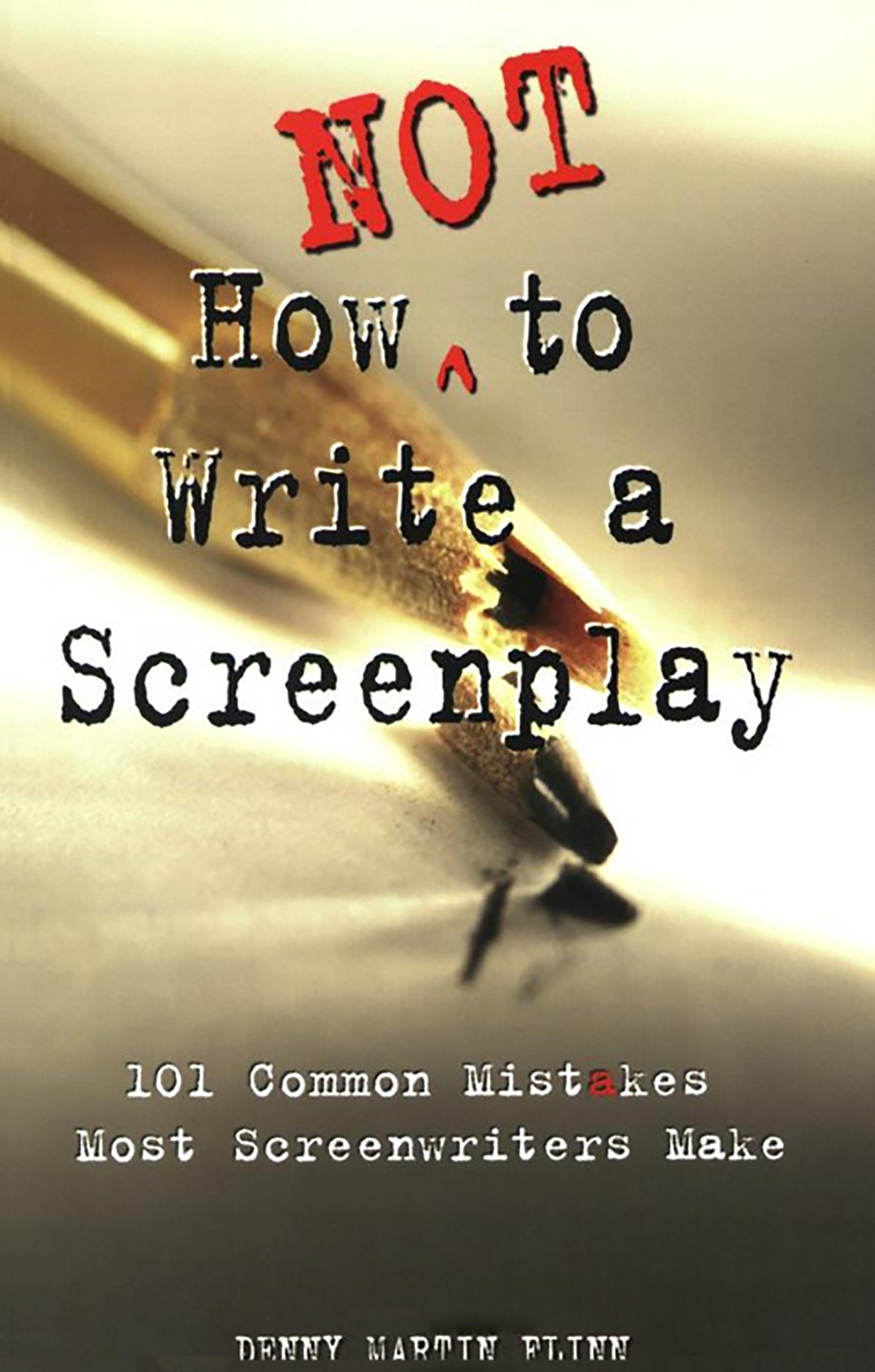
After our class on Script writing I decided to take a few books with me and one of them in particular, the 219 page book published in 1999 called How not to write a screenplay by Denny Martin Finn caught my eye. Reason for my interest in this book was definitely the title which really hit the nail with a hammer. In order to do something shouldn't you first know what not to do? That way you at least know not to fall into pitfalls with your work that might cost you the job you applied for and that is a sentiment that the author, Denny Martin Flinn shares as he notes in his introduction "If your screenplay gives them any indication it will be one of those bad screenplays, they're going to spot it right off".
So I decided to read this book, (wow this school has made me read more books out of my own free will than the whole time I was in upper secondary school) it's not too long but I thought that for people who do not like to read books regularly or don't have the time for it might enjoy the book's short tips in even shorter sentences and with examples done by another newbie. I won't be writing everything that this book contains but only few good tips I found interesting or useful and I highly recommend it to anyone interested in screenplay and script writing.
Terminology and tips:
If a screenplay has & between the creators names it means the two people worked on the script together.
If a screenplay has and between the creators names it means the two people worked on the script separately.
If you are writing a montage indicate that a MONTAGE is starting and to save space and paper try to write the scenes in short sentences like this:
MONTAGE:
Children playing in the playground.
Elementary school children in a classroom.
Teenagers smoking cigarettes behind a supermarket.
High school students partying.
Or another way you can do a montage is like this:
A series of quick cuts showing the life from childhood to adulthood.
...Children playing in the playground.
...Elementary school children in a classroom.
...Teenagers smoking cigarettes behind a supermarket.
...High school students partying.
Don't over do your script with descriptions or like the writer has phrased it "Don't sound like a Batman comic". Example of this type of writing:
I FEEL BREATHING...slow..heavy and damp. Right against my NECK. A slow shift of clothing is heard and a HAND comes up from the darkness behind me and closes around my neck. The lights FLICKER and start to DIM as darkness comes to me.
Do not use write written sound effects. The author points out sound effects make the script sound childish and more like satire and you don't need to write out the sound since people can from reading guess what the sound might be like. Example with and without:
CLANG the metal pipe the gang member had swung hit the railing behind CLARK.
Metal pipe the gang member had swung hit the railing behind CLARK.
Another advice the author gives is to not interrupt the speech too much. Example I came up with isn't the best at showing this but if you take the middle part away the script would be the same:
She takes hold of her hand
MELISSA
I don't want to leave
Hannah can no longer keep her feelings inside.
HANNAH
I don't want you to leave
You can use capital letters in order to emphasize certain things in your screenplay but be careful not to overuse them. Example of overuse when you are also introducing characters:
ALEX is HARRY'S FEMALE BOSS and she is known to be a SCARY boss and extremely UNFAIR towards her co-workers.
What I learned from this book especially is to not waste paper. Be to the point but still try to be interesting and to not overdo everything. I highly recommend the book. I haven't finished it yet but it should soon be up for loan at TAMK Mediapolis library.
The book I read
Comments
Post a Comment